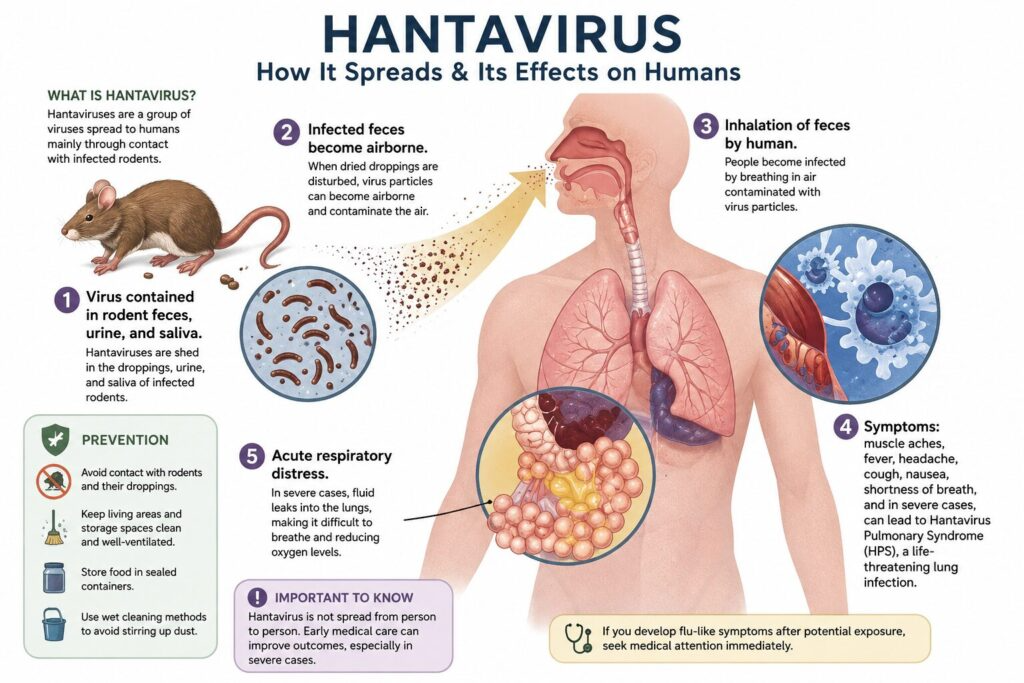
COVID-19 vs. Hantavirus 2026: The Lethality Gap and the Invisible Aerosol
Everyone is comparing the Hantavirus 2026 resurgence to the early days of COVID-19. They are making a fundamental error in epidemiological math. While both involve respiratory distress and aerosols, the “Lethality Gap” makes them two entirely different species of threat.
The world is still scarred by the SARS-CoV-2 pandemic, so when a virus with a 40% death rate starts jumping between humans on a cruise ship like the MV Hondius, the panic is understandable. But understanding the reality requires looking past the fear and into the mechanics of the “Invisible Aerosol.”
Here is the deep-dive comparison between the two defining viral threats of our era.
The Transmission War: Droplets vs. Dust
The mainstream take is that Hantavirus is “the new COVID.” This is biologically impossible for one simple reason: the reservoir.
COVID-19 (SARS-CoV-2)
- Mechanism: Human-to-human community spread.
- Vector: Respiratory droplets and fine aerosols produced by speaking, coughing, or breathing.
- The “Invisible” Threat: Asymptomatic carriers who spread the virus without knowing they are sick.
Hantavirus 2026 (Andes Strain)
- Mechanism: Zoonotic spillover (Rodent-to-human).
- Vector: Aerosolized viral particles from dried rodent urine, droppings, or saliva (the “Invisible Aerosol”).
- The “Invisible” Threat: Stirring up dust in a shed or cabin that hasn’t been aired out.
While the MV Hondius incident confirmed that the Andes strain can jump between humans, it remains an exception. COVID-19 is a professional “human-hacker,” designed to exploit our social nature. Hantavirus is a “wilderness accident,” occurring when humans intrude into rodent habitats.
Figure 1: The SARS-CoV-2 virion. Its “crown” of spikes allows it to latch onto human ACE2 receptors with high efficiency.
The Lethality Paradox: Why 50% is “Safer” than 1%
It sounds counter-intuitive: how can a virus that kills half of its victims be “safer” for the world than one that kills 1%? This is the Lethality Paradox.
A virus’s success is measured by its spread, not its kill count.
- COVID-19 has a Case Fatality Rate (CFR) of roughly 1% in 2026. This allows victims to stay mobile for days, attending parties, boarding planes, and spreading the virus to dozens of people before they feel truly ill.
- Hantavirus has a CFR of 35-50%. It is so “hot” and so fast that it often incapacitates the victim before they can effectively spread it to a large number of secondary contacts.
In short: COVID-19 is a slow-burn forest fire; Hantavirus is a lightning strike. One destroys the continent; the other destroys the tree.
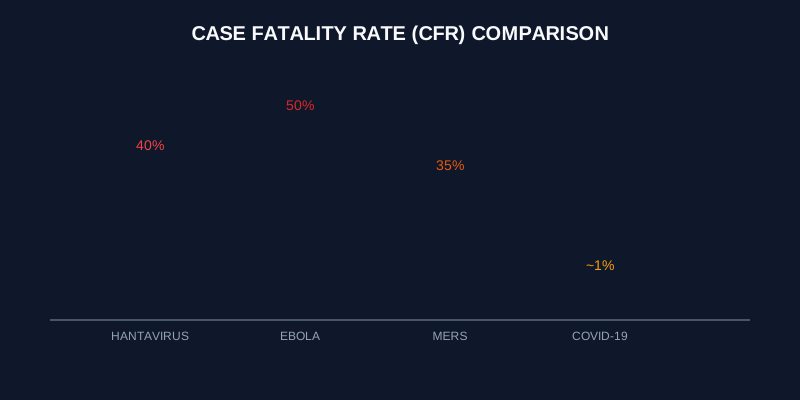 Figure 2: The staggering difference in lethality between the two viruses.
Clinical Progression: The Cytokine Storm
Both viruses trigger what doctors call a “cytokine storm”—an overreaction of the immune system—but they target different specialized cells.
| Stage | COVID-19 (Pneumonia) | Hantavirus (HPS) |
|---|---|---|
| Initial | Dry cough, sore throat, fatigue. | Intense muscle pain (Thighs/Back), high fever. |
| Intermediate | Gradual shortness of breath, loss of taste. | Nausea, vomiting, abdominal pain. |
| Critical | Ground-glass opacities in lungs; 7-14 days. | Sudden pulmonary edema (Lungs fill with fluid); 24-48 hours. |
If you have COVID, you might be on a ventilator for weeks. If you have HPS, you are in a race against time that is decided in hours. The fluid in an HPS patient’s lungs isn’t just inflammation; it’s a massive leakage of plasma from the capillaries, literally “drowning” the patient from the inside.
The Social Forum Pulse: Anxiety vs. Apathy
On platforms like X and Reddit, the sentiment shift between the two is palpable.
- COVID-19 Fatigue: Most users have moved into an “endemic apathy” phase. Even with new variants, the discussion is about vaccine boosters and “moving on.”
- Hantavirus Terror: Because Hantavirus is so lethal and “gross” (associated with rodents), the social discourse is far more panicked. The hashtag #InvisibleAerosol reflects a deep-seated fear of the air itself, leading to a resurgence in N95 mask sales for home cleaning.
As I discussed in my analysis of Shared Autonomy in UI Design, the way we present this data to the public through AI interfaces will determine whether we trigger a productive response or a paralyzing panic.
Prevention: The “Wet vs. Dry” Protocol
The single biggest takeaway for 2026 is the change in cleaning habits.
- For COVID: Air filtration (HEPA) and social distancing remain the gold standard.
- For Hantavirus: NEVER DRY SWEEP. If you are cleaning a space where rodents might have been, you must “wet down” the area with a 10% bleach solution first. Stirring up the dust creates the invisible aerosol that carries the virus directly into your lungs.
The Bottom Line
Hantavirus 2026 is not “COVID 2.0.” It is a reminder that we live in a world where the wilderness is increasingly overlapping with our urban spaces. We should fear Hantavirus for its individual brutality, but we should respect COVID-19 for its systemic power.
The question isn’t which virus is “worse”—it’s whether our healthcare systems, already strained by the Thinning US Economy, can handle the specialized ICU requirements of a high-fatality localized cluster.
TL;DR
- Thesis: Hantavirus is more lethal (40% death rate) but less contagious; COVID-19 is less lethal (1%) but a master of global spread.
- Key insight: The “Invisible Aerosol” of Hantavirus is dust-borne, while COVID-19 is breath-borne.
- Prediction: Localized “hot” clusters of Hantavirus will cause high-intensity panic, but will not lead to a 2020-style global lockdown.
- Action: Switch to “wet cleaning” protocols for storage units and rural properties to avoid Hantavirus exposure.
Think the Andes strain is being underestimated? Or are we just over-reacting due to COVID trauma? Join the discussion in my newsletter below.