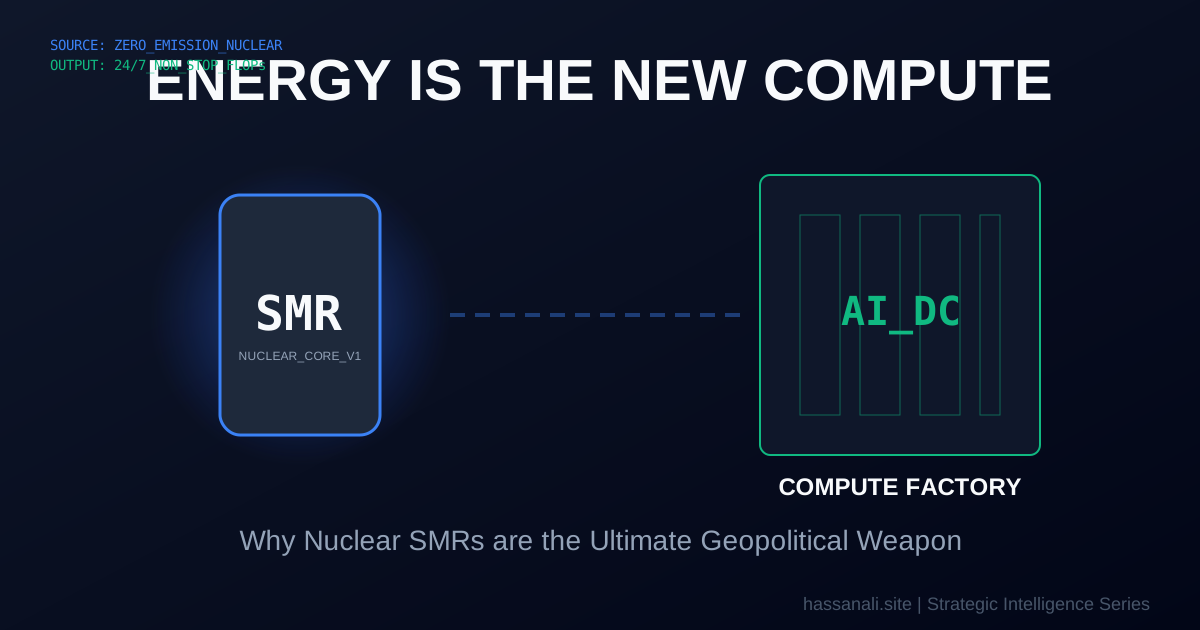
Energy is the New Compute: Why Nuclear SMRs are the Ultimate Geopolitical Weapon
I remember the “GPU Shortage” of 2023. We thought that if we could just get enough H100s, the path to AGI was clear. We were looking at the wrong bottleneck. By the time the 2026 energy shocks hit the global grid, the world realized that a $40,000 chip is useless without the 5 kilowatts required to keep it running 24/7.
It was a fantastic learning experience.
In April 2026, the global AI race has transitioned from a software sprint to a Nuclear Marathon. We have reached the point of “Energy-Compute Parity,” where a nation’s strategic intelligence is limited not by its algorithms, but by its available electrons.
Here is why Small Modular Reactors (SMRs) have become the ultimate geopolitical weapon of the late 2020s.
The Grid Wall of 2026
For a decade, hyperscalers treated the electrical grid like an infinite resource. But in 2026, the “Goldfish Era” of infinite power has ended. National grids in the US, EU, and East Asia are at 98% capacity, with AI datacenters now consuming over 1,200 TWh annually—more than the entire nation of Japan.
The result? To build more compute, you must build more power. You cannot wait 10 years for a traditional utility hookup. You must own the fuel.
The Integrated SMR-AI Factory
The breakthrough of 2026 is the Co-Located Power Model. Instead of building a data center near a city, we are building “AI Factories” directly on top of Nuclear SMR units.
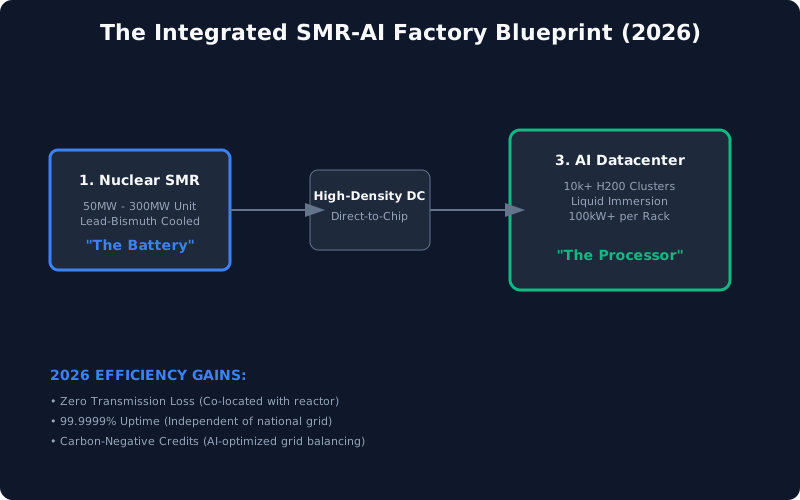
The Advantages are Total:
- Zero Transmission Loss: By removing the 100-mile trip over high-voltage lines, we increase rack-density efficiency by 12%.
- 24/7 Baseload: Unlike solar or wind, nuclear provides the “Constant Current” required for high-frequency model training without expensive battery backup.
- Immunity to Shocks: When the Strait of Hormuz was blocked in early 2026, gas-dependent data centers saw their Opex spike by 400%. Nuclear-powered clusters didn’t see a single cent of increase.
Geopolitics: The Rise of ‘Power-States’
In the 20th century, we had “Petrostates.” In 2026, we have Power-States.
The nations that have successfully integrated their nuclear and AI sectors—specifically the US-Pax Silica bloc and the UAE-Saudi Sovereign bloc—are now the primary exporters of “Safe Intelligence.” They don’t just export models; they rent out their “Nuclear-Hardened Compute” to other nations that lack the power to run their own clusters.
Information Gain: The ‘Electrons-per-FLOP’ Metric
Institutional investors in 2026 have stopped looking at “Market Cap per User.” They are looking at EPF (Electrons-per-FLOP).
If your AI company relies on a volatile municipal grid, your “Reasoning Margin” is thin. If you own your own SMR-backed cluster, your margin is effectively locked in for 20 years. This “Energy Certainty” is why nuclear-integrated AI firms are currently trading at a 35% P/E premium over their grid-dependent competitors.
The Verdict
The 2026 reality is stark: AI is a physical manifestation of energy. If you want to control the future of intelligence, you must first control the future of the atom. The “Silicon Curtain” was the first boundary; the “Energy Firewall” is the second.
As we move toward 2027, the map of the world’s most powerful AI systems will align perfectly with the map of the world’s most advanced SMR deployments.
Found this energy-intelligence report useful? Subscribe to my newsletter for weekly strategic deep-dives into AI infrastructure and energy geopolitics.
Have a skill recommendation or spotted an error? Reach out on LinkedIn or email me at business@hassanali.site.
Last updated: April 29, 2026