
Hantavirus 2026: The Deep-Dive into the MV Hondius Outbreak
Everyone is talking about the Hantavirus 2026 resurgence. They’re missing the point. The headlines focus on the numbers, but the real story lies in the “Andes Exception” and the breakdown of traditional quarantine protocols in the maritime industry.
The world watched in silence as the MV Hondius, a Dutch-flagged expedition vessel, became a floating laboratory for a virus we thought we had contained. This isn’t just another seasonal flu; it’s a high-consequence zoonotic spillover that has rewritten the rules of pandemic preparedness.
Here’s what’s actually happening, why it matters, and why the “invisible aerosol” is the most dangerous threat of the decade.
The MV Hondius Incident: How a Cruise Ship Became Ground Zero
The mainstream take goes like this: a few passengers got sick on a boat in Argentina. It sounds like a standard norovirus incident. It’s also dangerously wrong.
The MV Hondius outbreak, which began in April 2026, was triggered by a birdwatching expedition in Ushuaia, Argentina. The index case, a 70-year-old Dutch man, inhaled aerosolized dust in a rural shed during the excursion. By the time the ship hit the open Atlantic, the virus was already incubating.
The reality? The Hondius wasn’t just a victim of bad luck; it was the victim of the Andes virus, the only strain of Hantavirus known to spread between humans. When the World Health Organization (WHO) confirmed that a medical doctor on board had contracted the virus from a patient, the global health security community realized the “unthinkable” had happened: a highly lethal, person-to-person Hantavirus cluster on a cruise ship.
 Figure 1: The universal bio-security alert triggered by high-pathogenicity outbreaks.
Anatomy of a Killer: HPS vs. HFRS
To understand the 2026 risk, we must distinguish between the two primary syndromes. Hantavirus isn’t a single disease; it’s a family of pathogens with very different targets.
1. Hantavirus Pulmonary Syndrome (HPS)
Found primarily in the Americas (including the current Andes and Sin Nombre strains), HPS targets the lungs. It mimics a common cold for days before suddenly filling the lungs with fluid. The transition from “feeling tired” to “respiratory failure” can happen in under 24 hours.
2. Hemorrhagic Fever with Renal Syndrome (HFRS)
More common in Europe and Asia, HFRS targets the kidneys. While still dangerous, it generally has a lower fatality rate (1-15%) compared to the brutal 40% seen in the HPS clusters of 2026.
The Andes Exception: Is Human-to-Human Transmission the New Reality?
The core of the Hantavirus 2026 panic is the “Andes Exception.” For decades, the CDC maintained that Hantavirus was purely a rodent-to-human disease. You inhaled the dust, you got sick, but you didn’t pass it to your family.
The MV Hondius incident proved that in close-quarter environments—like cruise ship cabins or medical wards—the Andes strain can and will jump.
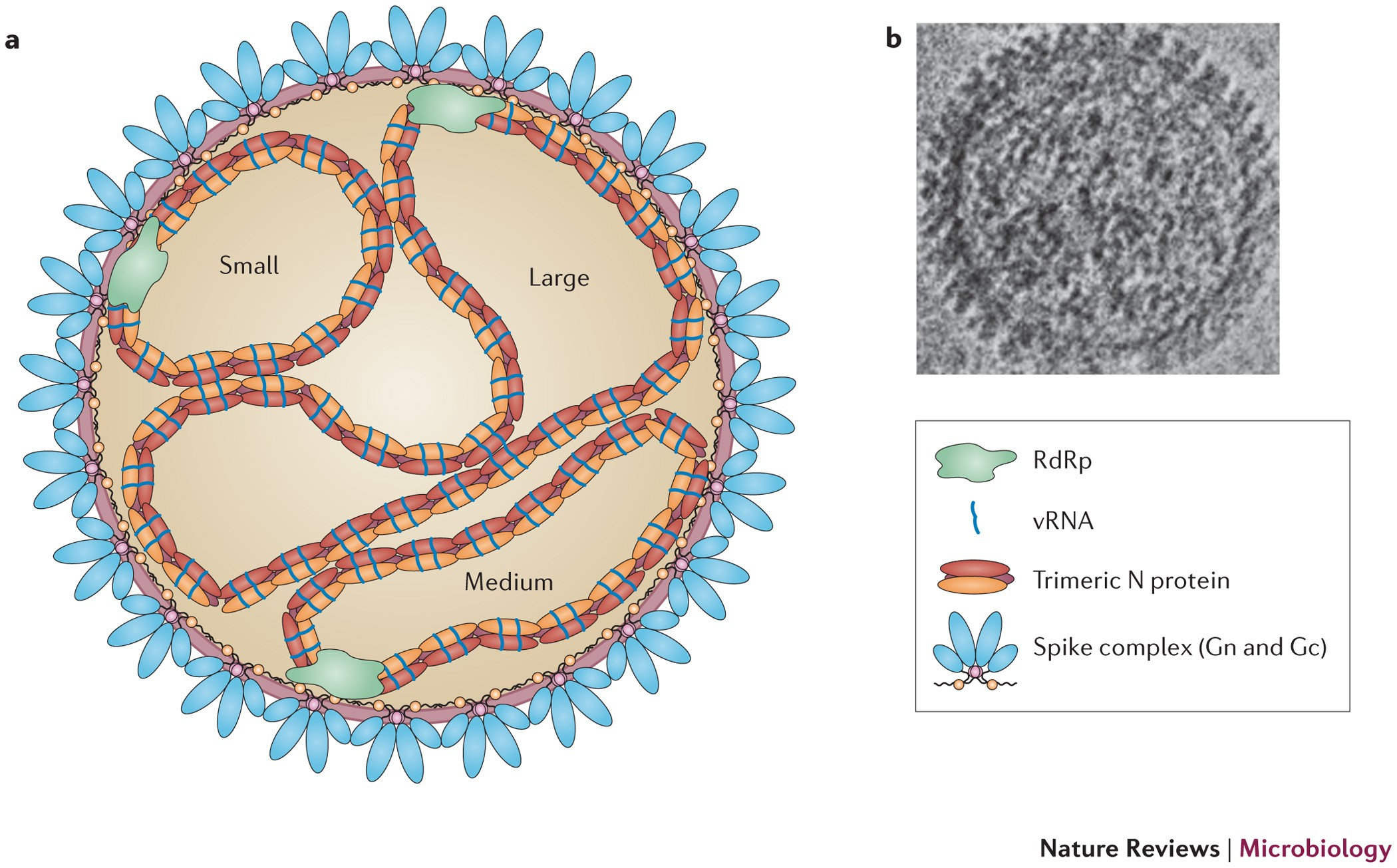 Figure 2: The complex transmission cycle of Hantavirus, showing the progression from rodent reservoirs to human infection and the intracellular viral replication process.
As I noted in my analysis of AI Sovereignty & Geopolitics, the ability of national healthcare systems to track these “invisible” transmission chains is now a matter of national security.
Symptoms & Stages: Why Early Detection is Nearly Impossible
The diagnostic gap is where the virus does its deadliest work. The incubation period is shockingly long—1 to 8 weeks—meaning a traveler can return home, feel perfectly fine for a month, and then collapse.
Phase 1: The Mimic (Days 1–5)
- High Fever (101°F+)
- Severe Muscle Aches (Thighs, hips, back)
- Fatigue and Chills
- Headaches and Dizziness
Phase 2: The Crisis (Days 4–10)
This is the “sudden onset” phase. Patients feel like they are drowning while standing up. The lungs fill with fluid, and the heart struggles to pump oxygenated blood. At this stage, the only hope is ICU admission and, in extreme cases, ECMO (Extracorporeal Membrane Oxygenation).
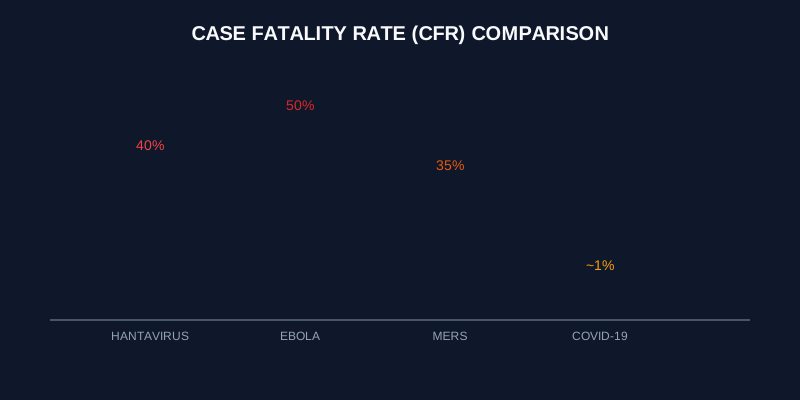 Figure 3: Case Fatality Rate (CFR) comparison showing the lethal nature of Hantavirus vs other global threats.
Fact vs. Fiction: Debunking Hantavirus Conspiracy Theories
Whenever a lethal virus makes headlines, the internet noise machine starts spinning. In 2026, the Hantavirus discourse on social forums has reached a boiling point.
The “Lab Leak” Theory
Theory: The Ushuaia birdwatching trip was a cover for a deliberate release of a weaponized Andes strain. The Reality: Genetic sequencing by the WHO has shown the MV Hondius strain to be a 99.8% match for wild-type Andes virus found in the Patagonian wilderness. There is zero evidence of lab manipulation.
The “Climate Engineering” Rumor
Theory: Government weather modification caused the rodent population explosion. The Reality: This “trophic cascade” is a well-documented ecological phenomenon. Heavy rains after a long drought lead to an abundance of seeds, which leads to a mouse population boom. It’s biology, not HAARP.
The Social Forum Pulse: What Reddit & X Are Saying
On r/Hanta26, users are obsessing over cabin-by-cabin maps of the Hondius. The sentiment is a mix of genuine health anxiety and extreme preparedness.
The hashtag #InvisibleAerosol has been trending on X (formerly Twitter) for three weeks. People are sharing “wet cleaning” videos and debating the merits of N95 vs. P100 masks for cleaning garages and sheds. The “Great De-cluttering” of 2026 has seen a massive spike in people hiring professional bio-hazard teams to clean their storage units.
Prevention & Survival: The “Bleach & Seal” Protocol
If you live in the “Four Corners” of the US, or rural South America, the risk is real but manageable. Mainstream health advice tells you to “be careful.” I’m telling you to be surgical.
- Never Sweep or Vacuum: If you see mouse droppings, do not stir up the dust. This is how the virus becomes an “invisible aerosol.”
- The 10% Bleach Rule: Mix 1.5 cups of household bleach with 1 gallon of water. Spray the droppings and let them soak for 5 minutes before wiping them up with paper towels.
- Seal the Gaps: A mouse can fit through a hole the size of a dime. Use steel wool and caulk to seal every entrance point.
Expert Outlook: Is a Hantavirus Pandemic Possible?
The question isn’t whether Hantavirus could become a pandemic—it’s whether we are prepared for a pathogen with a 40% kill rate that doesn’t follow the rules of respiratory spread.
Experts at the LSHTM (London School of Hygiene & Tropical Medicine) suggest that while the Andes strain is terrifying, its “R0” (reproduction number) remains well below 1. It requires prolonged, intimate contact to spread between humans. We are not looking at “COVID-26.”
However, as the US Economy thins, the cost of specialized ICU care for Hantavirus patients is becoming a major burden on national health budgets.
The bottom line? Hantavirus 2026 is a wake-up call for the “Invisible Aerosol” era. It’s not about lockdowns; it’s about hygiene, awareness, and the realization that the wilderness is closer than we think.
Next Steps
- Audit your storage spaces: Use the “Bleach & Seal” protocol immediately.
- Monitor travel alerts: If you’ve been in the Southern Cone or the Western US, watch for the “Phase 1” mimic symptoms.
- Stay Informed: Follow my deep-dives on Privacy & Air-Gapped Health Research to understand how we secure the data behind these outbreaks.
TL;DR
- Thesis: Hantavirus 2026 is a lethal reminder that zoonotic viruses don’t stay in the wild; the MV Hondius proved the Andes strain can jump between humans in close quarters.
- Key insight: The “Andes Exception” is the real threat, making quarantine protocols on ships and in hospitals far more complex.
- Prediction: No global pandemic, but expect localized clusters and a permanent shift in how we handle maritime health security.
- Watch: Keep an eye on WHO “Maritime Bio-Security” updates and the #InvisibleAerosol hashtag for real-time spread data.
Disagree with the WHO’s risk assessment? Think the “Andes Exception” is being downplayed? Subscribe to my newsletter and let’s argue — I respond to every email.