
MCP Gateways: Building a Secure OS for your Autonomous AI Agents
MCP Gateways: Building a Secure OS for your Autonomous AI Agents
The year 2025 was about “Models.” The year 2026 is about Connections.
As we move from single-chat interfaces to autonomous agentic fleets, the “naive” architecture of directly connecting an LLM to your internal tools is becoming a catastrophic security risk. Every direct connection is a potential “Identity Leak” or a “Tool Poisoning” vector.
Enter the MCP Gateway.
The Model Context Protocol (MCP) has emerged as the universal standard for AI-to-tool communication. But in a production environment, you don’t just need a protocol; you need an Operating System. The MCP Gateway acts as the “Agentic Firewall”—a centralized, session-aware layer that governs how models interact with your reality.
Quick Answer: What is an MCP Gateway?
An MCP Gateway is a centralized security and orchestration layer that sits between AI models (like Claude 4.5 or GPT-5) and their available tools (MCP servers). It centralizes Identity Assurance, enforces Capability Scoping, and provides Audit Logs for every tool call. Unlike simple direct connections, a gateway ensures that an autonomous agent can only access the data it needs and that every action is verified against a “Human-in-the-Loop” policy.
Table of Contents
- The Credential Paradox: Why Direct Connections Fail
- The 4-Pillar Security Framework for MCP
- Architecture: From STDIO to Streamable HTTP
- The ‘Rug Pull’ Attack: Defending the Agentic Perimeter
- Tutorial: Building a Session-Aware Gateway
- FAQ: Securing the Agentic OS
1. The Credential Paradox: Why Direct Connections Fail
In the early days of AI experimentation, developers simply passed their personal GitHub or Slack API tokens to a model. This is the Credential Paradox: The more tools you give an agent to make it useful, the more valuable a target you make it for a compromise.
In 2026, a single breached agent can become a “Super-User” with access to your entire enterprise stack. A direct connection architecture offers zero visibility into what the model is doing behind the scenes.
The Solution: The MCP Gateway decouples the model from the secret. The model requests an action via a “Capability Token,” and the gateway performs the actual call using encrypted, ephemeral credentials that the model never sees.
| Architecture | Security Level | Scalability | Performance |
|---|---|---|---|
| Direct (STDIO) | Low (Secret Exposure) | Poor (Single Machine) | High (<1ms) |
| Cloud Bridge | Medium (Third-party Risk) | Good | Variable (Latency) |
| Sovereign Gateway | Highest (Zero-Trust) | Excellent (Horizontal) | Sub-5ms (Local) |
2. The 4-Pillar Security Framework for MCP
To build a production-grade “Agentic OS,” your gateway must enforce these four pillars:
I. Identity Assurance
Every agent in your fleet must have a unique cryptographic identity. Before a tool is executed, the gateway verifies that the requesting agent ID has the explicit permission to perform that action.
II. Capability Scoping
Instead of giving an agent access to a whole API, the gateway enforces “Function-Level Scoping.” Using the OWASP MCP Top 10 guidelines, the gateway restricts the parameters an agent can pass to a tool.
III. Inline Redaction
Before tool data is sent back to the LLM, the gateway scans the output for PII or internal secrets. If a tool call to a database accidentally returns a password hash, the gateway redacts it in real-time.
IV. Immutable Auditing
Every tool call is logged to a secure, immutable ledger. This is mandatory for EU AI Act Compliance starting August 2026.
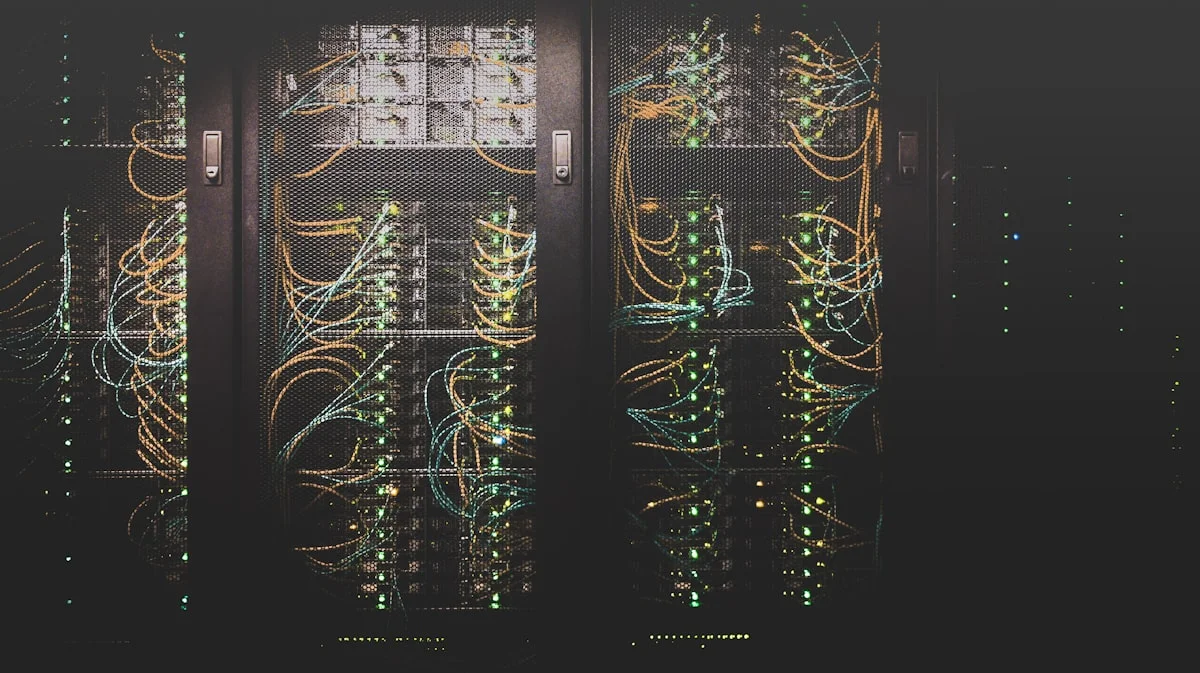 Figure 1: Visualizing real-time agentic traffic flows through a secured gateway.
3. Architecture: From STDIO to Streamable HTTP
Most “Hello World” MCP tutorials use STDIO. While fast, STDIO doesn’t scale. It requires the agent and the tool to live on the same physical machine.
In 2026, the enterprise standard is Streamable HTTP. This allows you to host your MCP servers in a distributed environment connected to a central MCP Gateway via secure, persistent SSE or WebSockets.
4. The 'Rug Pull' Attack: Defending the Agentic Perimeter
The most sophisticated threat of 2026 is the Rug Pull Tool Attack.
Scenario: An attacker publishes a high-quality, open-source MCP server. Six months later, they push an update that secretly adds a withdraw_funds tool to the manifest.
The Gateway Defense: A secure MCP Gateway implements Manifest Versioning. When a tool definition changes, the gateway blocks the server until an administrator reviews and re-approves the expanded capabilities.
5. Tutorial: Building a Session-Aware Gateway
You can build a foundational gateway using Node.js and the MCP SDK.
Step 1: Initialize the Gateway
import { McpServer } from "@model-context-protocol/sdk/server/mcp.js";

const gateway = new McpServer({
  name: "Enterprise-Gateway",
  version: "1.0.0",
});
Step 2: Implement “Human-in-the-Loop” Logic
gateway.tool("delete_user", { id: z.string() }, async ({ id }) => {
  const approved = await requestHumanApproval(`Delete user ${id}?`);
  if (!approved) throw new Error("Action cancelled by operator.");
  return performDelete(id);
});
FAQ: Securing the Agentic OS
Why do AI agents need a gateway?
A gateway centralizes control, allowing you to rotate keys, audit actions, and block malicious prompts in one place.
How does MCP handle authentication?
The gateway layer adds OAuth 2.1 or Identity-Based Auth, ensuring that only verified models can “talk” to your tools.
Conclusion: The New Layer of the Stack
The MCP Gateway is the Operating System of 2026. It is the layer that turns a collection of scripts into a professional, secure, and auditable enterprise intelligence fleet.
As you build your Sovereign Agentic Stack, remember: the protocol connects the nodes, but the Gateway secures the kingdom.
Last Updated: May 11, 2026 Reviewed by: Muhammad Hassan Ali — Sovereign Infrastructure Engineer.