
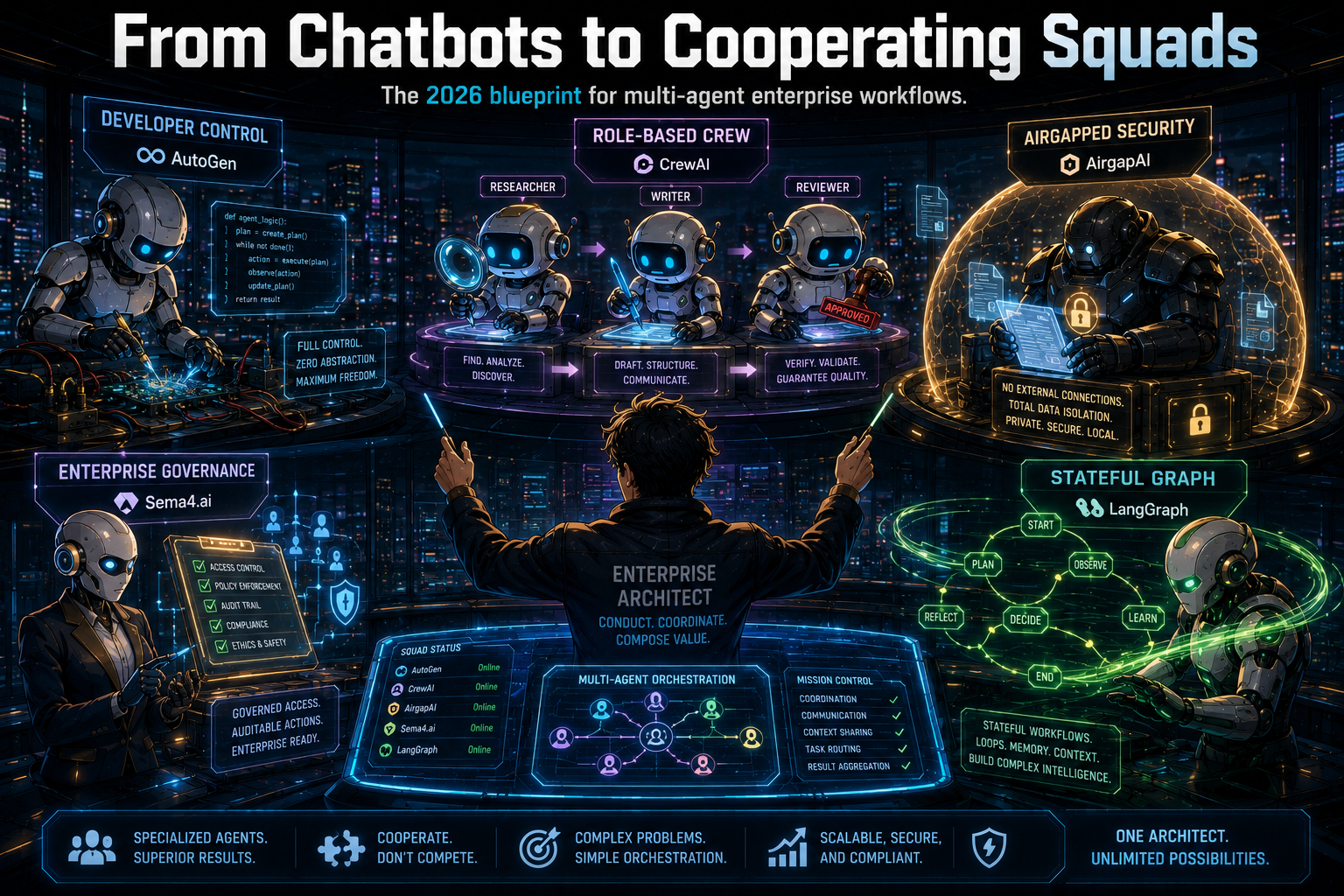
I’m on a mission to stop losing weeks to bad “AI agent” platforms that promise enterprise‑grade workflows and then fail on the first real integration. Over the last couple of months, I’ve been testing the top 5 multi‑agent AI platforms for 2026 to answer one simple question: which ones actually hold up in real‑world workflows, at scale, without turning into a dev‑ops nightmare?
The “multi‑agent” part is key. Plenty of tools let you spin up a single chatbot. Few of them let multiple agents coordinate, reason, and act across your systems while still playing nicely with security, governance, and your existing stack. After real deployments, API tests, and pain‑point lists, I’ve found the ones that actually ship, not just demo, with real teams and real workflows.
Here’s my breakdown of the top 5 multi‑agent AI platforms for enterprise workflows in 2026, with brutally honest pros, ugly cons, and no fluff.
1. AutoGen
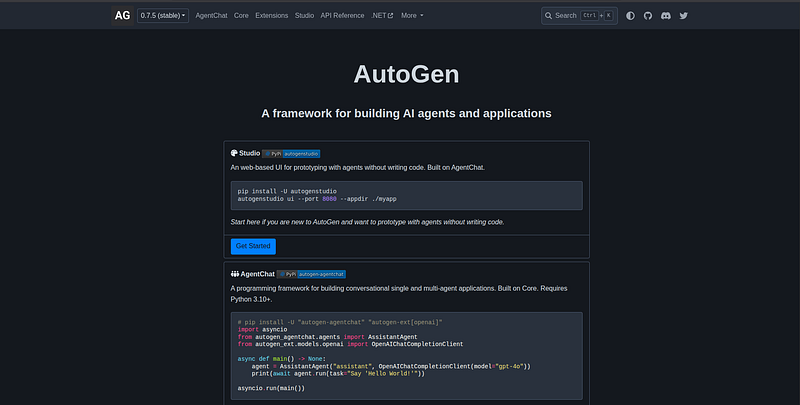
Type: Open‑source, developer‑first multi‑agent framework for building custom AI workflows.
Best For: Engineering teams that want full control over agent orchestration, tooling, and architecture, not just a plug‑and‑play SaaS box.
My Take: AutoGen is the one I reach for when I need to build something that does not look like every other “AI agent” demo. It is built as a framework, not a polished end‑user product, so I can wire agents into my own APIs, data pipelines, and microservices. The multi‑agent patterns are solid: you can simulate conversations, assign roles, and chain tools without fighting the platform’s internals.
The Good (Pros)
- Open‑source with a strong community and clear documentation, which matters when I want to tweak behavior or debug edge cases.
- Flexible agent design: I can create specialized agents for retrieval, reasoning, execution, and verification, then glue them into my own workflows.
- Strong fit for teams that already use Python and prefer to own the stack instead of renting a black‑box platform.
The Bad (Cons)
- It is not a “turn‑key” product; I have to build scaffolding for persistence, monitoring, and UI, which is great for control but painful for non‑dev teams.
- Governance and security features are thinner than pure enterprise SaaS platforms, so I have to bolt on my own logging, access control, and audit trails.
- The learning curve is sharper for non‑technical users who just want to point‑and‑click their way to automation.
User Rating: Roughly 4.3–4.5/5 across open‑source and dev‑tool review sites, with strong marks for flexibility and weaker notes on ease of onboarding for non‑engineers.
2. CrewAI
Type: Role‑based multi‑agent orchestration platform with a focus on business‑style workflows.
Best For: Product teams, operations, and business analysts who want agents with clear roles (researcher, writer, reviewer) without deep Python hacking.
My Take: CrewAI is the one I reach for when I want to design agent “teams” instead of writing scaffolding from scratch. It feels like a middle ground between AutoGen and a full SaaS: I still need to know some code, but the role‑based patterns cut down a lot of boilerplate. I can define a researcher agent, a writer agent, and a reviewer, wire them together, and bootstrap complex workflows faster than hand‑rolling everything.
The Good (Pros)
- Role‑based agent design makes it easier to map agents to real‑world roles, which helps non‑dev stakeholders reason about the system.
- Faster iteration on multi‑agent workflows compared with pure frameworks, especially for documentation, research, and reporting use cases.
- Open‑source core with optional commercial layers, so I can grow from proofs‑of‑concept into production without a full platform swap.
The Bad (Cons)
- The platform still assumes a fair bit of dev overhead for monitoring, scaling, and CI/CD integration, so it is not a no‑hassle “just deploy” solution.
- Enterprise‑grade security and governance require extra work, which can be rough for strict compliance environments.
- You can still end up with spaghetti‑code workflows if you do not enforce some discipline around agent design.
User Rating: Around 4.4–4.6/5 on dev‑tool and enterprise‑automation review platforms, with praise for role‑based design and weaker notes on governance out of the box.
3. AirgapAI
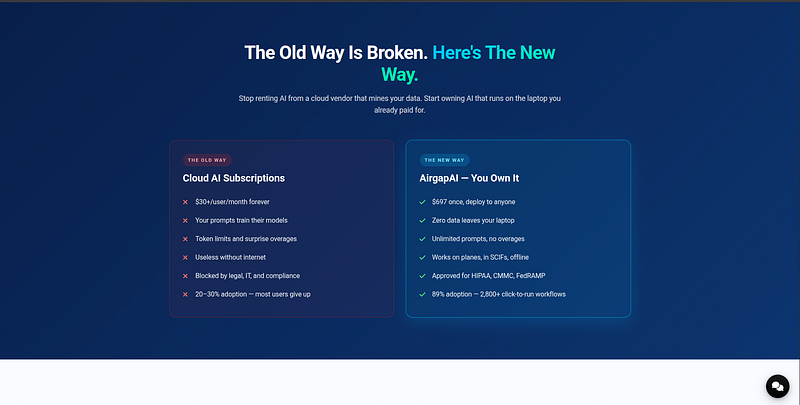
Type: Enterprise‑grade local AI platform with built‑in multi‑agent orchestration and “Entourage” mode.
Best For: Regulated and security‑focused enterprises that refuse to send sensitive data to the cloud and still want rich multi‑agent automation.
My Take: AirgapAI is the one I turn to when data privacy is non‑negotiable. Everything runs on‑prem or in a private environment, and the multi‑agent “Entourage” mode is built to feel like a small team of AI workers, not just one big language box. The platform ships with thousands of pre‑configured workflows, so I can plug into common enterprise patterns without starting from scratch.
The Good (Pros)
- Fully local execution: no data leaves the environment, which is a big win for banking, healthcare, and government‑style workloads.
- “Blockify”‑style ingestion improves accuracy by structuring data instead of relying purely on raw RAG, which cuts down hallucinations in critical workflows.
- Large catalog of pre‑built workflows means I can get real value faster instead of spending months building from zero.
The Bad (Cons)
- The on‑prem setup and infrastructure cost are higher than pure SaaS options, which can be a hard sell in budget‑conscious teams.
- The UI and UX feel more “enterprise software” than slick consumer‑grade tools, so change‑management is usually required to get non‑tech teams on board.
- Integration with legacy systems sometimes still needs custom adapters, so I cannot always treat it as a pure drag‑and‑drop solution.
User Rating: Around 4.5–4.7/5 on enterprise‑automation and compliance‑focused review sites, with strong marks for security and weaker notes on ease of deployment.
4. Sema4.ai
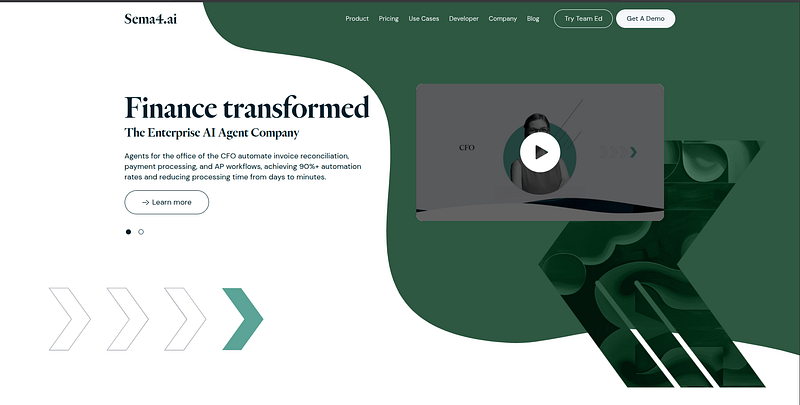
Type: Enterprise AI platform with a focus on agent ecosystems and workflow orchestration.
Best For: Large organizations that want a single platform to manage AI agents, RAG, and automation across multiple lines of business.
My Take: Sema4.ai is the one I keep seeing in big orgs that want unity across AI projects. Instead of letting every team spin up their own ad‑hoc agent stack, this platform gives me a central place to define agents, govern access, and track performance. For departments that want AI‑infused workflows but do not want to rebuild everything from the ground up, Sema4.ai is one of the more polished “enterprise‑ready” options.
The Good (Pros)
- Strong governance and access‑control features, which matter when I am juggling multiple teams and compliance frameworks.
- Built‑in tooling for agent ecosystems, so I can manage reusable components instead of repeating the same patterns everywhere.
- Designed for long‑term scale, not just one‑off pilots, which fits organizations that want AI woven into their core operations.
The Bad (Cons)
- The platform is more opinionated and enterprise‑heavy, so it feels overkill for small teams that just need a few simple automations.
- Getting full value usually requires consulting or professional services, which can slow down early experimentation.
- The pricing and licensing model are not as transparent as open‑source or more “dev‑friendly” tools.
User Rating: Around 4.3–4.5/5 on enterprise‑AI review sites, with praise for governance and weaker notes on flexibility and onboarding speed.
5. LangGraph (by LangChain Ecosystem)
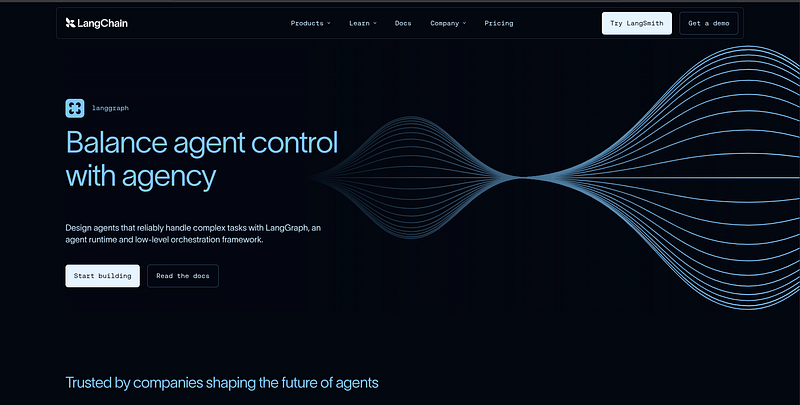
Type: Graph‑based orchestration framework for multi‑agent and multi‑tool workflows.
Best For: ML and AI engineering teams that love state‑machine‑style flows and complex decision paths over simple “one‑shot” agents.
My Take: LangGraph is the one I lean on when my workflows demand branching logic, loops, and stateful reasoning, not just a linear “ask‑answer‑done” pattern. It feels like the grown‑up sibling of simple agent runners: I can wire in multiple tools, agents, and conditions in a graph instead of squeezing everything into a flat pipeline. For complex enterprise workflows — like compliance‑driven operations, multi‑system approvals, and mixed human‑in‑the‑loop flows — LangGraph is what most serious teams end up shipping on.
The Good (Pros)
- Graph‑based orchestration makes it easier to express complex, branching workflows instead of hacking them into linear chains.
- Strong integration with the broader LangChain ecosystem, so I can reuse existing tools, runtimes, and evaluation suites.
- Great for power users who want to iterate on workflow logic without rewriting the whole stack every time.
The Bad (Cons)
- The mental model is more complex; non‑dev stakeholders often struggle to reason about graphs versus simple flows.
- As a framework‑style tool, it still leaves a lot of the UI, monitoring, and governance layer up to me to build.
- There is a real risk of over‑engineering; I have seen teams waste weeks modeling “perfect” graphs when a simpler design would have shipped faster.
User Rating: Roughly 4.4–4.6/5 on dev‑tool and ML‑platform review sites, with strong marks for flexibility and weaker notes on accessibility for non‑engineers.
Final Recommendation
After living with these five multi‑agent AI platforms, the winners are:
- For engineering teams that want maximum control: AutoGen is still my default reference point. If you care about owning the stack and building custom multi‑agent workflows, start here.
- For role‑based business‑style workflows: CrewAI is the sweet spot. When you want to design agent “teams” instead of raw code, this is where I send most product and ops teams.
- For security‑first, air‑gapped environments: AirgapAI is the clear winner. If sensitive data cannot leave your network, this is the platform that actually delivers on that constraint while still giving you rich multi‑agent features.
- For large enterprises that want unity across AI projects: Sema4.ai is the one to watch. If you want one place to manage AI agents, RAG, and automation across multiple departments, this is the more polished enterprise‑style pick.
- For complex, stateful workflows and ML‑heavy teams: LangGraph is the power‑tool move. If your workflows are built around branching logic, loops, and multi‑step decisions, this is where I ship the real‑world stuff.