The Karachi Edge: Why Solo-Building in Karachi is the Geopolitical Play of 2026
The Karachi Edge: Why Solo-Building in Karachi is the Geopolitical Play of 2026
In May 2026, the most dangerous competitor to a Silicon Valley startup isn’t another venture-backed company in Palo Alto. It’s a solo-builder in a shared workspace in DHA Karachi, armed with a local-first AI stack and an economic runway that is mathematically infinite.
The “Burn Rate War” of the late 2020s is being won by those who can out-last the market. While Western builders are suffocated by the “Thinning US Economy” and high-interest rates, a new breed of Sovereign Solo-Builders in emerging markets is using Geopolitical Arbitrage to build global-scale products at a fraction of the cost.
Quick Answer: What is the Karachi Advantage?
Solo-building in Karachi offers a unique geopolitical edge in 2026 through Geopolitical Arbitrage. By combining an 89% lower cost of living ($434/mo vs $4,040/mo in SF) with a 72x AI-driven labor advantage, developers in Karachi achieve an “Infinite Runway.” This allows them to ship high-margin SaaS products globally while operating with an economic moat that Western competitors cannot penetrate.
Table of Contents
- The Burn Rate War: Silicon Valley vs. Karachi
- The 72x Multiplier: The Era of the Software Composer
- The Sovereign Stack: Building a Local Intelligence Factory
- Digital Colonialism vs. Sovereign Intelligence
- Tutorial: The 3-Step Sovereign Pivot
- FAQ: Building from the Global South
1. The Burn Rate War: Silicon Valley vs. Karachi
The era of “Blitzscaling” is over. In 2026, efficiency is the only survival metric that matters. According to the 2026 Global Developer Cost Index, the disparity between established tech hubs and emerging markets has reached a breaking point.
In San Francisco, a solo developer’s “burn rate”—the minimum cost to stay alive and building—is roughly $4,040 per month. In Karachi, that same standard of living (including reliable fiber internet and power backups) costs approximately $434 per month.
The Math of Arbitrage (2026 Data)
| Metric | Silicon Valley (SF) | Karachi, Pakistan | Difference |
|---|---|---|---|
| Average 1BR Rent | ~$3,200 | ~$230 | 92.8% Lower |
| Monthly Living Cost | ~$4,040 | ~$434 | 89.2% Lower |
| Annual “Runway” Cost | $48,480 | $5,208 | $43,272 Saved |
| Economic Moat | Venture Capital | Infinite Runway | - |
Key Fact: A developer in Karachi with $5,000 in savings has a one-year runway to build a product. A developer in San Francisco with the same amount has roughly 37 days.
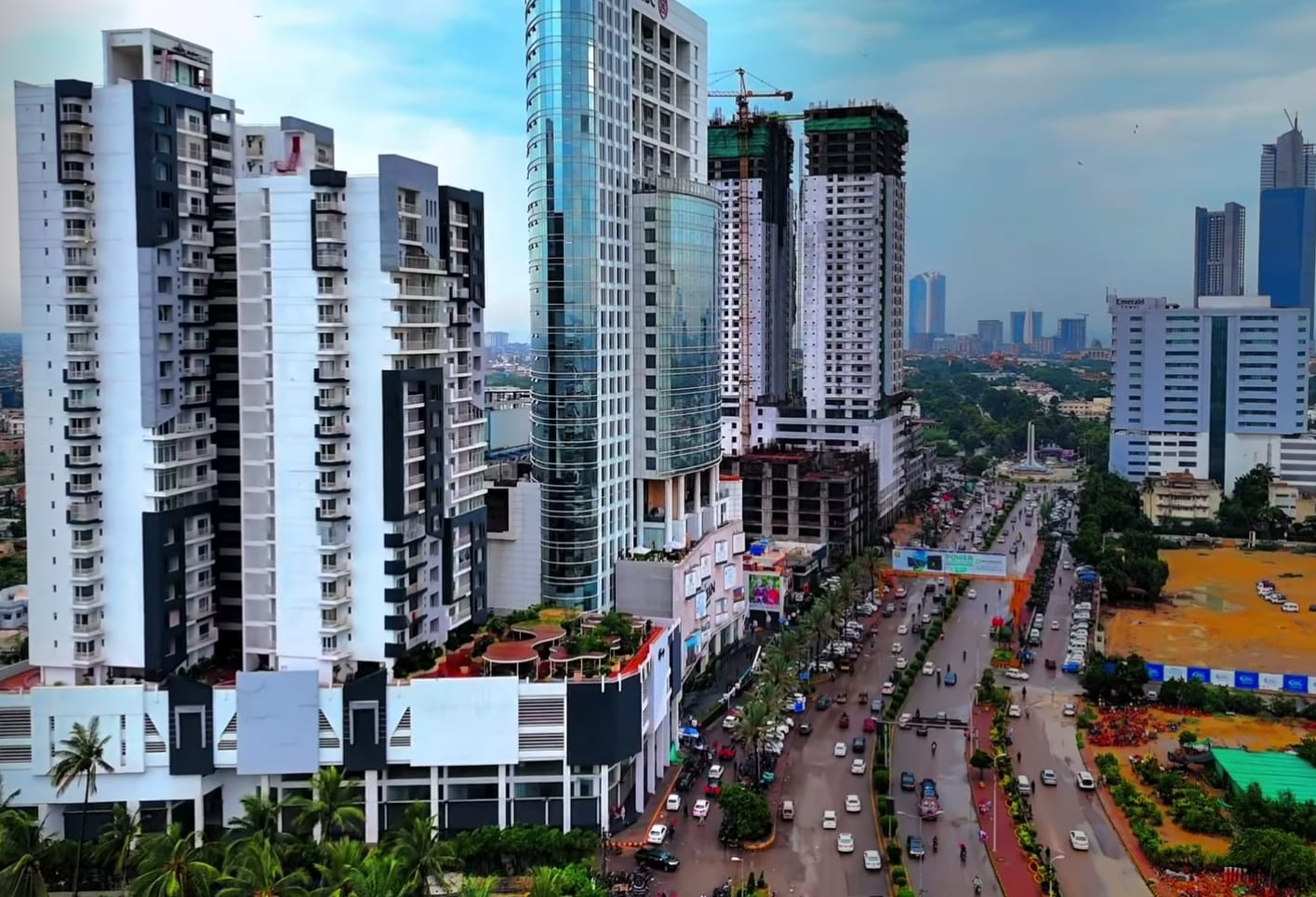
 Figure 1: The Sovereign Solo-Builder workspace—low burn, high leverage.
This isn’t just about being “cheaper.” It’s about asymmetric risk-taking. When your cost of failure is 10x lower, you can experiment 10x more.
2. The 72x Multiplier: The Era of the Software Composer
For the last decade, Karachi was seen as a “service center”—a place to outsource the “boring 60%” of code. In 2026, AI has commoditized that 60%. The role of the developer has shifted from a “coder” to a “Software Composer.”
With tools like Cursor, Claude Code, and vLLM, a solo-builder now has a 72x labor advantage. For every $1 spent on AI inference tokens, a developer gains the equivalent of $72 in human labor value.
In an emerging market, this multiplier is a superpower. Why? Because the “Human” component of the equation is the only variable that Western markets cannot subsidize. By the time a Silicon Valley PM finishes a “Scrum” meeting to discuss a feature, a Karachi solo-builder has already prompted their agentic fleet to ship the MVP.
 Figure 2: Moving from manual coding to agentic orchestration.
3. The Sovereign Stack: Building a Local Intelligence Factory
To truly leverage the Karachi Edge, you must avoid the “API Tax.” If you rely entirely on expensive US-based APIs (OpenAI, Anthropic), your margins are capped by their pricing power. This is the new digital rent.
The 2026 Sovereign Solo-Builder uses a Local-First Intelligence Factory:
- Local Compute: Running DeepSeek-V3 or Llama-3 (70B) on a local workstation using Ollama. This reduces token costs by 99.4% (cost of electricity only).
- Model Context Protocol (MCP): Standardizing on MCP to ensure that your agentic tools can swap between local and cloud models without a single line of refactoring.
- Agentic Mesh: Deploying a fleet of specialized agents (Research, Dev, Sales) orchestrated by a central “Composer” model.
4. Digital Colonialism vs. Sovereign Intelligence
The Islamabad AI Declaration of Feb 2026 warned against “Digital Colonialism”—the extraction of data from emerging markets to train models that are then sold back to those same markets at a premium.
By Solo-Building in Karachi, you are participating in the Geopatration movement. You are keeping the intelligence local. You are building products that understand the local supply chain, the Urdu-voice economy, and the unique financial hurdles of the Global South.
As I argued in my Sovereign Agentic Stack article, the winners of this decade won’t be the ones with the most GPUs; they will be the ones who own the Intelligence-to-Reality pipeline.
5. Tutorial: The 3-Step Sovereign Pivot
Step 1: Audit the “Boring 60%”
Identify the repetitive tasks you do for clients (UI components, basic API integrations, unit tests). Use Cursor to automate these. Your goal is to reclaim 15 hours per week.
Step 2: Build your “LTM” (Long-Term Memory)
Use Notion or a local Qdrant instance to store every snippet of code, strategy, and market insight you’ve ever generated. This is your “Intelligence Base.” Use a GraphRAG pipeline to make this searchable by your agents.
Step 3: Launch a “Sovereign Spoke”
Don’t build a massive platform. Build a “Spoke”—a single-purpose AI utility that solves an expensive problem (e.g., “AI-driven tax filing for Pakistani exporters”). Price it in USD. Launch on Gumroad.
FAQ: Building from the Global South
Is Karachi a good place for solo developers?
Yes. In 2026, Karachi offers the best cost-to-infrastructure ratio in the region. With widespread fiber availability and a surging community of AI-native builders at hubs like NIC Karachi, it provides the “Infinite Runway” needed for solo-building.
How much can a solo-builder earn in Pakistan?
A solo-builder shipping niche B2B SaaS can easily reach $3,000 - $10,000/month in recurring revenue. Given the local standard of living, this is equivalent to a $250,000 salary in a Western tech hub.
What is the cost of living for a developer in Karachi?
Approximately $400–$600 per month for a high-quality lifestyle, including premium co-working spaces, high-speed internet, and reliable power backup.
Conclusion: The New Innovation Unit
The “Karachi Edge” isn’t a trend; it’s a structural realignment of global power. In the AI era, the traditional advantages of Silicon Valley (capital and talent density) are being neutralized by the raw leverage of the Sovereign Agentic Stack.
The next decacorn won’t be a 1,000-person company in San Francisco. It will be a team of one in a room in Karachi, thinking globally, building locally, and out-lasting the giants.
Author: Muhammad Hassan Ali — AI Developer and Solo-Builder based in Karachi. Last Updated: May 11, 2026