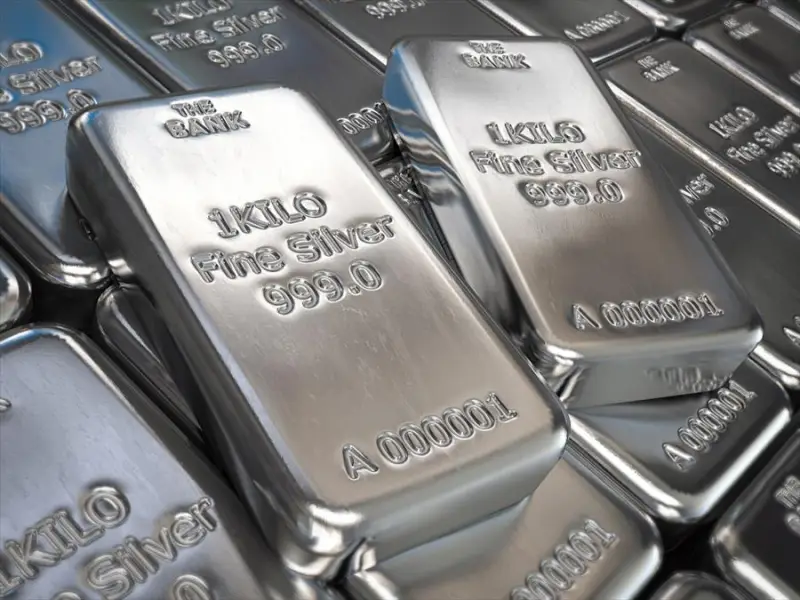
The Silicon-Silver War: How the Permanent War Footing is Strangling the AI Supply Chain
Everyone is talking about whether the next generation of LLMs will achieve AGI. They’re missing the point.
The most critical bottleneck for artificial intelligence in 2026 isn’t algorithm design or even silicon fabrication. It’s the fact that you cannot build a gigawatt-scale data center without thousands of tons of raw, highly conductive earth—specifically silver and copper.
Here’s what’s actually happening in the defense vs AI commodity scramble, why the looming silver shortage AI 2026 is mathematically unsolvable in the short term, and how the “Stagflationary War Economy” is strangling the tech supply chain.
The Conventional Narrative (And Why It’s Wrong)
The mainstream take goes like this: Tech giants have unlimited capital. They will simply buy all the GPUs Nvidia can produce, build massive data centers in the desert, and power through to AGI. Commodity prices might rise slightly, but Silicon Valley’s purchasing power will secure whatever raw materials are needed.
It sounds plausible. It’s also entirely wrong.
This assumes that tech companies are the only entities aggressively buying up these materials. They aren’t. We are currently in the middle of the most aggressive global military rearmament cycle since the 1930s. When a sovereign nation needs silver for missile guidance systems or copper for drone swarms, they do not care about a tech company’s profit margins. They invoke national security protocols.
What’s Really Driving the Commodity Scramble
The real driver behind the May 2026 supply chain crisis is the collision of two historical macro trends.
The AI Infrastructure Black Hole
Data centers require unprecedented amounts of power and thermal management. Copper is required for transformers, switchgears, and power cables. Silver, the most conductive element on earth, is critical for high-end server interconnects, advanced cooling systems, and the solar panels often used to supplement grid power.
The Permanent War Footing
Simultaneously, the geopolitical destabilization across Eastern Europe and the Middle East (specifically the Hormuz shock) has placed NATO and Asian powers on a permanent war footing. A modern cruise missile requires roughly 500 ounces of silver. Drone swarms require immense amounts of copper and rare earths.
The reality: We are witnessing a “Silicon-Silver War”—a zero-sum bidding war where Silicon Valley’s AI ambitions are competing directly with the Pentagon and allied defense ministries for the exact same physical resources.
The Historical Pattern
This isn’t new. Technology booms always eventually collide with physical reality. The pattern is familiar:
- 19th Century Railroads: The rail boom was constrained not by capital, but by the physical limits of steel production and timber for railroad ties.
- 1970s Space Race: The Apollo program consumed massive amounts of specialized alloys, crowding out commercial applications.
- May 2026: The AI boom has hit the “hard limits of dirt.” The silver shortage AI 2026 is the modern equivalent of running out of steel during the industrial revolution.
History doesn’t repeat, but it rhymes. You can print fiat currency, but you cannot print copper.
The Market’s Response
Markets are severely mispricing this dual-demand shock. Equities traders are buying up tech stocks under the assumption that AI scaling will continue exponentially. Meanwhile, commodities traders are quietly cornering the physical market.
We are seeing a structural deficit in silver, which has operated at a supply deficit for four consecutive years. Above-ground stockpiles are being drained. As tech companies realize that their 2027 and 2028 data center roadmaps are physically impossible to fulfill at current commodity prices, we will see vertical integration. (We are already seeing this with AI companies investing directly in uranium mines to secure nuclear baseload power).
Where This Is Headed
Here’s my call on the commodity squeeze:
- Short-term (1-3 months): We will see major tech companies issue profit warnings citing “supply chain friction” regarding data center construction, specifically pointing to power infrastructure (copper/transformers).
- Medium-term (6-12 months): Governments will begin invoking “Defense Production Act” equivalents, prioritizing raw materials for military contractors over commercial AI data centers.
- Long-term (1-3 years): The cost of compute will skyrocket. The era of cheap, ubiquitous AI inference will end as the capital expenditure required to secure energy (uranium) and infrastructure (silver/copper) gets passed down to the consumer.
I could be wrong. But here’s what would prove me wrong: If a sudden, unforeseen breakthrough in room-temperature superconductors eliminates the need for silver and copper in data transmission. (Spoiler: Don’t bet your portfolio on it).
What to Watch
Keep an eye on these indicators:
| Indicator | Current State | Watch For |
|---|---|---|
| Silver Inventories (COMEX/LBMA) | Draining | A sudden drop below critical threshold levels, sparking a short squeeze. |
| Data Center Capex Guides | Increasing | Tech earnings calls explicitly mentioning power/transformer delays. |
| Uranium Spot Price | Elevated | Sustained price spikes as hyperscalers attempt to lock in 10-year baseload contracts. |
The Bottom Line
The defense vs AI commodity scramble isn’t a temporary supply chain glitch. It is the defining economic conflict of the decade.
The question isn’t whether AI will get smarter. The question is whether we have enough physical earth to plug it in, especially when the military-industrial complex is bidding for the exact same dirt.
TL;DR
- Thesis: The biggest bottleneck for AI in 2026 is physical commodities, not algorithms or chips.
- Key insight: A dual-demand shock exists where AI data centers and global military rearmament are competing for the same limited supply of silver, copper, and uranium.
- Prediction: Governments will prioritize military procurement over commercial AI, leading to massive delays in data center construction and a spike in compute costs.
- Watch: COMEX silver inventories and the spot price of uranium as tech giants scramble for power and conductivity.
Disagree? Think tech companies will innovate their way out of physical constraints? Subscribe to my newsletter below and let’s argue — I respond to every email.