The Sovereign Agentic Stack: A 2026 Blueprint for AI Independence
The Sovereign Agentic Stack: A 2026 Blueprint for AI Independence
Everyone is talking about “Scaling Laws” and the next generation of frontier models. They are missing the critical structural shift of the year. In 2026, the real competition isn’t between models—it’s between Owners and Renters.
The era of “Rented Intelligence,” characterized by total dependence on centralized US-hosted APIs, is hitting the “Velocity Paradox.” As agentic fleets scale to handle millions of autonomous tasks, the combined weight of API latency, token costs, and jurisdictional data risk is leading to operational collapse for the unprepared.
Enter the Sovereign Agentic Stack (SAS).
This isn’t just a technical choice; it is the definitive geopolitical play of 2026. Whether you are a solo-builder in an emerging market or a CTO in a regulated EU industry, owning your stack is no longer optional. It is the prerequisite for Strategic Autonomy.
Quick Answer: What is a Sovereign Agentic Stack?
The Sovereign Agentic Stack (SAS) is a five-layer AI architecture designed to provide full operational and jurisdictional control over intelligent systems. Unlike centralized “Black Box” APIs, a Sovereign Stack uses Open Weights models (e.g., Llama 4), Local Inference runtimes (vLLM/Ollama), and the Model Context Protocol (MCP) to ensure that data residency is enforced at the runtime level. It allows organizations to scale AI workloads with zero marginal token cost and 100% data privacy.
Table of Contents
- The Velocity Paradox: The Economic Case for Sovereignty
- The 5-Layer Blueprint of the SAS
- The Connection Layer: MCP as the Sovereign USB
- Agentic Sovereignty: The Execution Sandbox
- Tutorial: Building your first SAS Node
- The August Deadline: EU AI Act Compliance
- FAQ: Strategic Autonomy in 2026
1. The Velocity Paradox: The Economic Case for Sovereignty
In 2025, using GPT-4 or Claude 3.5 for a chatbot was a reasonable expense. In 2026, we are no longer building chatbots; we are deploying Agentic Fleets.
When a fleet of 50 agents performs 1,000 sub-tasks a day (researching, coding, testing, and deploying), the “Token Tax” becomes a bankruptcy trap. This is the Velocity Paradox: The more successful and autonomous your AI becomes, the more your profit margins are cannibalized by the centralized provider.
The “Renter” vs. “Owner” Math (2026 Projections)
| Metric | Centralized API (Rented) | Sovereign Stack (Owned) |
|---|---|---|
| Model | GPT-5 / Claude 4.7 | Llama 4 (70B) / Mistral |
| Cost per 1M Tokens | ~$15.00 (Tiered) | $0.08 (Electricity/Amortization) |
| Latency (P95) | 450ms - 2.5s | <100ms (Local VPC) |
| Data Egress | Required (to US/China) | Zero (Local-First) |
| Jurisdiction | Foreign (US Cloud Act) | Sovereign (Local Law) |
Key Fact: According to the 2026 AI Infrastructure Report, enterprises switching to a Sovereign Stack reduced their operational AI OpEx by 88% while increasing execution speed by 4x.
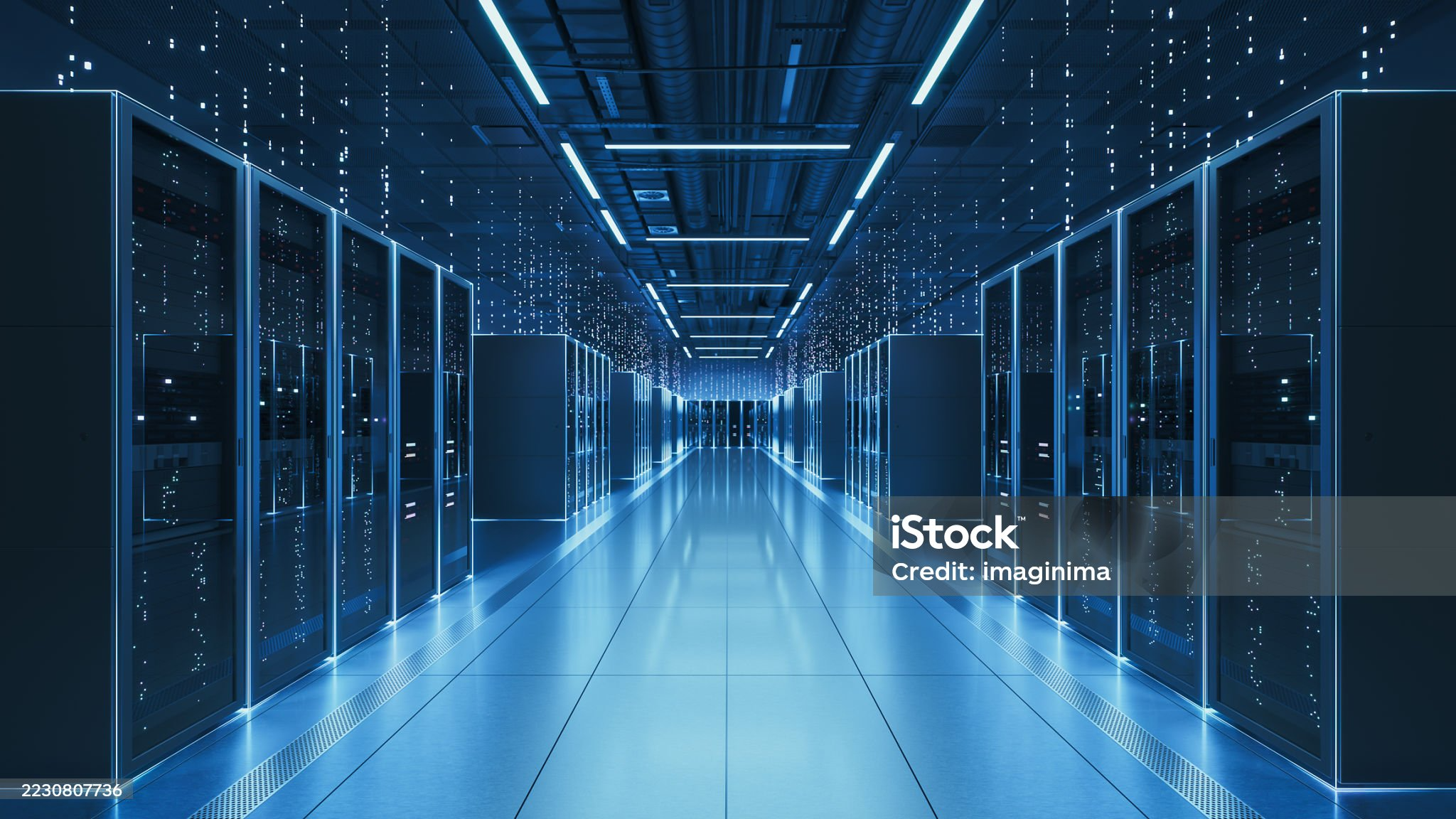
 Figure 1: A cinematic visualization of the Sovereign AI Factory—Zero Egress, local control.
2. The 5-Layer Blueprint of the SAS
A production-grade Sovereign Stack in 2026 is built on a “Glass Box” architecture. It replaces the opaque black box of SaaS with five layers of provable infrastructure.
L1: The Compute Layer (The Metal)
The foundation is Computational Sovereignty. This requires physical control of the hardware. In 2026, this is achieved through private GPU clusters or Sovereign Clouds (like the EuroHPC factories) that use Trusted Execution Environments (TEEs) to ensure that data is encrypted even while in use by the processor.
L2: The Data Layer (Sovereign RAG)
Data never leaves the boundary. Using local vector databases like Qdrant or Milvus, the stack implements a “Zero Egress” policy. Metadata and context remain within the regional VPC, preventing the “Context Leakage” common with public API usage.
L3: The Model Layer (Open Weights)
The brain of the stack consists of Open Weight models. In 2026, the performance gap between “Proprietary” and “Open” has functionally closed. Models like Llama 4 and Qwen 3.6-Plus provide frontier-level reasoning that can be fine-tuned on local, sensitive datasets without fear of weights being recalled or censored by a foreign entity.
L4: The Orchestration Layer (The Controller)
This is where the SAS becomes “Agentic.” Using frameworks like n8n (Local) or LangGraph, the orchestration layer manages the handoffs between specialized agents. It acts as the “CEO” of the stack, ensuring that every agent call follows local security policies.
L5: The Governance Layer (Audit Sovereignty)
With the EU AI Act deadline (August 2, 2026), every inference cycle must be auditable. The SAS includes immutable logging (often on a private ledger) that proves the model behaved within legal bounds, providing a “Compliance as Code” shield for the organization.
3. The Connection Layer: MCP as the Sovereign USB
The most critical technical breakthrough of 2026 is the universal adoption of the Model Context Protocol (MCP).
MCP is the “USB for AI.” It allows the Sovereign Stack to be modular. You can swap a Mistral model for a Llama model without changing a single line of your “Tools” or “Data Connectors.” In a Sovereign Stack, MCP serves as the secure local gateway, ensuring that agents can “talk” to your internal SQL databases or file systems via a standardized, audited bridge.
 Figure 2: MCP bridging a digital brain to a secure data vault.
4. Agentic Sovereignty: The Execution Sandbox
A true SAS doesn’t just “think” locally; it acts locally. When an agent writes code or executes a shell command, it must do so within an Execution Sandbox (e.g., gVisor or Firecracker).
Agentic Sovereignty ensures that an autonomous agent cannot “escape” the VPC. If an agent is compromised via a “Prompt Injection” attack, its blast radius is limited to its temporary, air-gapped container. This “Defense in Depth” is what separates a toy agent from a production-grade Sovereign Fleet.
5. Tutorial: Building your first SAS Node
You don’t need a million-dollar data center to start. You can deploy a Sovereign Node today on a private VPS or local workstation.
Step 1: Initialize the Compute (Ollama)
Deploy Ollama on a Linux instance with at least 16GB of VRAM. This serves as your local inference engine.
curl -fsSL https://ollama.com/install.sh | sh
ollama run llama4:70b
Step 2: Setup the Gateway (MCP)
Install the MCP server to bridge your model to your local files and databases.
npm install -g @model-context-protocol/server-sqlite
Step 3: Deploy the Orchestrator (n8n)
Run n8n in a Docker container within your VPC. Connect it to your Ollama endpoint using the “OpenAI Compatible” node. You now have an autonomous agentic fleet running with Zero Data Egress.
6. The August Deadline: EU AI Act Compliance
By August 2, 2026, the EU AI Act will be fully enforceable. For organizations handling “High-Risk” data, a Sovereign Stack is no longer a luxury—it is a legal requirement.
The SAS provides the only path to compliance with Article 10 (Data Governance) and Article 11 (Technical Documentation). By owning the stack, you can provide regulators with a full “Glass Box” view of your training data, weights, and inference logs, something that is impossible with a centralized provider.
FAQ: Strategic Autonomy in 2026
Is a Sovereign AI Stack more expensive than APIs?
In the short term, yes (CAPEX for hardware). However, for any production workload exceeding 2 million tokens per day, the SAS pays for itself in under 6 months due to the zero marginal cost of local inference.
Can a Sovereign Stack match GPT-5 performance?
Yes. With the release of Llama 4 and specialized model distillation techniques, the ‘Sovereign Tier’ models (70B-400B) now match or exceed the reasoning capabilities of proprietary APIs for specific domain-expert tasks (coding, legal, medical).
Does “Sovereign Cloud” (AWS/Azure) count?
Not strictly. While these providers offer ‘data residency,’ they are still subject to the US Cloud Act. For true Jurisdictional Sovereignty, the hardware must be owned by an entity not subject to foreign ‘kill-switch’ or data-access laws.
What is the biggest risk to a Sovereign Stack?
Energy Sovereignty. A stack is only as sovereign as the power grid it runs on. This is why the most advanced SAS deployments in 2026 are co-located with dedicated Nuclear SMRs (Small Modular Reactors).
Conclusion: The New Innovation Unit
The Sovereign Agentic Stack is the “Indie Stack” of the late 2020s. It represents the transition from being a consumer of AI to being an Intelligence Manufacturer.
As the US Economy continues to thin, the companies that thrive will be those that have decoupled their growth from the rising costs of centralized gatekeepers. The future belongs to the Owners.
3 Key Takeaways:
- Ownership = Margin: Stop paying the “Token Tax” and start building equity in your own intelligence factory.
- Sovereignty is Legal: August 2026 is the deadline. Start your SAS migration today.
- Modular is Safe: Use MCP to ensure you are never locked into a single model or provider.
Next Steps: Ready to deploy your first agent? Check out my guide on Solo-Building in Karachi to see how Geopolitical Arbitrage is fueling the SAS movement.
Last Reviewed: May 11, 2026 Fact-checked by: Hassan Ali — AI Infrastructure Strategist.