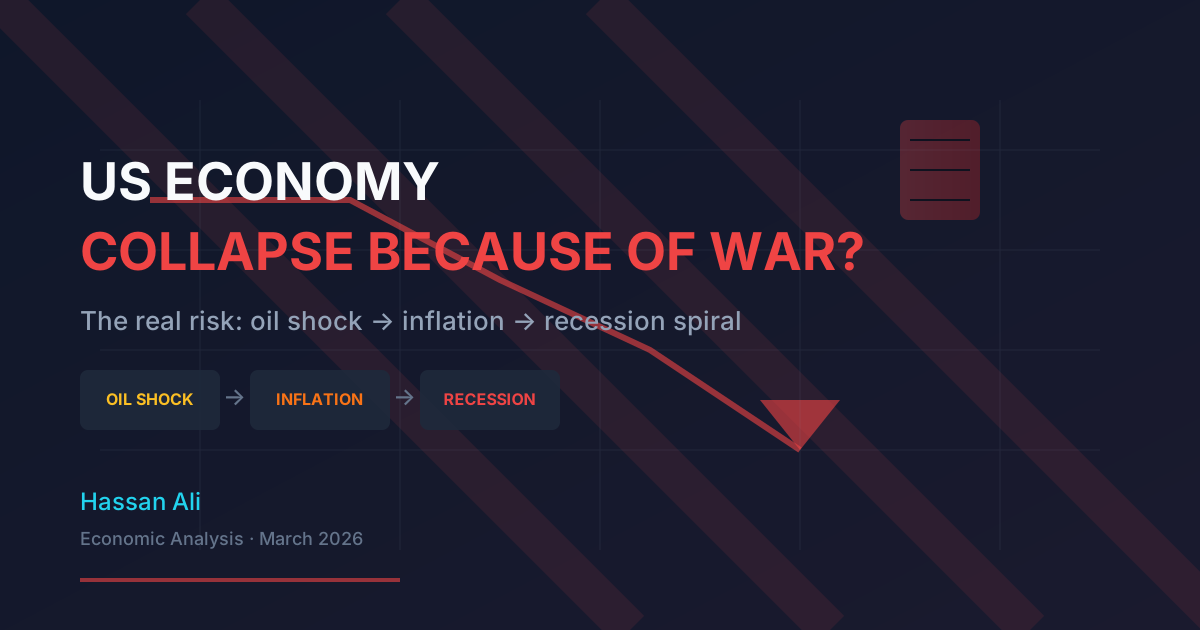
US Economy Collapse Because of War? The Real Risk Is an Oil-Inflation-Recession Spiral
People searching for US economy collapse because of war are asking a real question, but in the wrong language. War does not automatically collapse the U.S. economy. The more serious risk is narrower and more dangerous: a large conflict can disrupt oil flows, push inflation back up, keep interest rates higher for longer, and turn an already fragile expansion into recession. That is the mechanism worth analyzing. Not the headline panic, but the chain reaction underneath it.
This is not a theoretical risk. The regional escalation already has a live geopolitical backdrop, which I broke down in The U.S. and Iran Are Already Fighting… We Just Haven’t Labeled It Yet.
The Thesis
The U.S. economy is unlikely to collapse from war in a single dramatic moment. What is far more plausible is a layered economic breakdown: energy shock first, inflation second, tighter financial conditions third, then slower spending, weaker hiring, and falling business confidence. If those pressures stack at the same time as high debt and elevated rates, the result is not cinematic collapse. It is something more realistic and more damaging — a grinding recession with policy options already constrained.
Can war really collapse the US economy?
Why the keyword overstates the base case
The phrase “collapse because of war” assumes a direct one-step relationship between conflict and economic failure. That is not how modern macroeconomic stress usually works. The U.S. is a large, diversified economy with deep capital markets, reserve-currency status, and the capacity to absorb shocks better than smaller states. A regional conflict by itself is not enough to break that system.
The problem starts when people confuse resilience with immunity. The U.S. economy does not need to “collapse” for households to feel severe damage. A sustained rise in fuel costs, higher food prices, expensive credit, and weaker job growth can create conditions that feel like economic breakdown long before official data uses that language. For most people, recession-level stress is the relevant threshold.
What history says about war, oil shocks, and recessions
The real historical pattern is not war in general. It is war that disrupts commodities, shipping routes, or expectations. Energy is the central variable. When oil spikes hard enough, it acts like a tax on the entire economy. Consumers spend more on gasoline and utilities. Businesses pay more for transport, inputs, and logistics. Margins compress. Demand weakens. Inflation rises at the worst possible time.
That pattern matters because the U.S. economy is already highly sensitive to energy-driven inflation. A war that leaves oil markets stable may generate headlines without systemic damage. A war that threatens supply chokepoints, tanker traffic, or regional production has a very different macro profile. The issue is not battlefield geography. It is whether conflict moves into the pricing structure of daily life.
The more realistic question investors should ask
The better question is not, “Will war collapse the U.S. economy?” It is, “What transmission channels could turn war into a U.S. recession?” That shifts the analysis from emotion to mechanism.
There are five channels that matter most: oil, shipping, inflation expectations, interest-rate policy, and consumer behavior. If conflict stays contained, these channels may flare and fade. If they remain under stress for months, the economy can deteriorate quickly even without a formal crisis. Serious analysis starts there.
How war hits the US economy first
Oil supply disruption and the Strait of Hormuz problem
The first and fastest transmission mechanism is oil. Markets do not wait for actual shortages to reprice risk. They respond to the possibility that supply could be interrupted. That is why chokepoints matter more than maps. If traders believe a conflict could threaten a route like the Strait of Hormuz, crude prices can jump long before physical flows are fully disrupted.
For the United States, that matters even if domestic production remains relatively strong. Oil is globally priced. Americans do not live inside a sealed energy system. If global supply risk rises, U.S. consumers still pay the price through gasoline, diesel, aviation fuel, and petrochemical costs.
If you want the oil-specific version of this argument, read my breakdown of The Assassination of Ayatollah Khamenei: What the US-Israel Strike on Iran Means for Oil, War, and Power.
Why gasoline prices matter more than headlines
Gasoline is where geopolitics becomes personal. Households do not track tanker insurance rates or crude futures spreads. They notice the weekly cost of commuting, deliveries, and groceries. When gasoline rises sharply, consumers cut discretionary spending elsewhere. That shift hurts restaurants, retail, travel, and small business revenue almost immediately.
This is why war-induced energy shocks are politically and economically dangerous. They compress purchasing power without any corresponding rise in wages. In practical terms, that functions like a broad consumption squeeze, especially for lower-income households that already spend a larger share of income on essentials.
How shipping, insurance, and logistics costs spread the shock
Energy is only the first layer. Once conflict raises maritime risk, shipping costs rise with it. Insurance premiums increase. Routes lengthen. Delivery times become less predictable. Even firms that are not directly exposed to the war zone begin paying more to move goods across the system.
That turns a geopolitical event into a supply-chain event. The result is familiar: more expensive imports, tighter inventories, and renewed pressure on manufacturers and distributors who were hoping for normalization. The public usually sees this late, after the cost increases have already filtered into prices.
The inflation chain reaction that turns conflict into economic pain
Higher energy costs feed directly into consumer prices
Inflation does not need to restart everywhere to become a problem again. Energy can do the job on its own. Once fuel costs rise, transport becomes more expensive, utilities become more expensive, and businesses begin passing through higher operating costs. Some sectors can absorb that temporarily. Most cannot.
The danger is timing. If inflation has been moderating and policymakers are preparing for easier conditions, a war-driven energy spike can reverse that path. Markets then have to reprice the rate outlook, and households face a new cost burden at the same moment.
Why food, transport, and manufacturing costs rise next
The second-round effects are where the damage compounds. Food becomes more expensive because production, refrigeration, packaging, and transport all depend on energy. Airlines and freight operators face immediate fuel pressure. Manufacturers absorb higher costs for both raw materials and distribution. Even if wage growth cools, the cost base keeps climbing.
This is how a conflict that looks geographically distant turns domestic. Not through abstract geopolitical theory, but through the structure of everyday pricing.
How war can reverse a falling-inflation trend
A war shock is most dangerous when central banks believe inflation is coming under control. In that environment, markets are positioned for relief. A renewed commodity spike then forces a rapid reset: inflation expectations rise, bond markets adjust, and confidence in a soft landing weakens.
That is the core vulnerability. War does not need to destroy demand overnight. It only needs to interrupt disinflation long enough to keep financial conditions tight. Once that happens, the economy starts taking damage from both sides: higher prices and restricted credit.
Why the Federal Reserve becomes the critical pressure point
War-driven inflation can delay rate cuts
The Federal Reserve does not respond to war as a geopolitical event. It responds to the inflation and growth consequences of that event. If conflict keeps energy prices high and inflation sticky, rate cuts become harder to justify. That matters because many parts of the U.S. economy are already dependent on eventual monetary relief.
A war shock, then, does not need to create a recession directly. It can do so indirectly by blocking the easing cycle that markets, businesses, and households were counting on.
Higher rates squeeze housing, business borrowing, and credit
When rates stay higher for longer, weak points become visible fast. Housing affordability remains strained. Small businesses face expensive credit lines. Corporate refinancing gets harder. Consumers carry more costly balances on credit cards, auto loans, and variable debt.
This is where the war narrative becomes economically serious. The energy shock is the trigger. Financial conditions are the amplifier.
The danger of stagflation instead of a normal slowdown
The worst version of this setup is not a normal cyclical slowdown. It is stagflation-lite or worse: slower growth, weak hiring, and persistent inflation at the same time. That combination is toxic because it limits policy flexibility. Cutting rates risks feeding inflation. Holding rates high risks worsening the slowdown.
That is where the phrase US economy collapse because of war becomes misleading but still points toward a real fear. The actual risk is not instant collapse. It is a policy trap in which war pressure keeps prices elevated while the real economy loses momentum.
The deeper issue is that the U.S. economy was already weakening before any war shock, which is why I argued earlier that The U.S. Economy Is Not Crashing — It’s Quietly Thinning Everywhere at Once.
What would make the US economy move from slowdown to collapse
A long war with sustained oil above crisis levels
For the U.S. economy to move from slowdown into something closer to systemic crisis, the war would need to be prolonged and economically contagious. The first condition is sustained energy stress. A short oil spike can hurt sentiment and spending. A long oil spike can begin restructuring household and business behavior.
The distinction matters. Temporary price shocks are painful but survivable. Persistent energy inflation changes planning itself. Firms delay hiring. Consumers postpone major purchases. Transport-intensive sectors cut capacity. Markets begin assuming weaker growth as a baseline rather than a temporary dip.
That is when the problem stops being a geopolitical premium and becomes a macro regime change.
Simultaneous market selloff, weak consumer spending, and rising unemployment
A true economic break usually requires multiple pressures hitting at once. Oil alone is not enough. Neither is a market correction by itself. The serious danger appears when higher energy costs coincide with falling asset prices, weaker consumer demand, and labor-market deterioration.
That combination matters because the U.S. economy is consumption-heavy. If households are paying more for essentials while also feeling poorer from falling portfolios, retirement accounts, or home affordability, they cut spending faster. Businesses then respond by freezing hiring or reducing labor demand. Once unemployment begins rising meaningfully, the shock moves from prices into incomes.
At that point, the feedback loop becomes more dangerous. Lower spending weakens business revenue. Weak revenue reduces hiring. Slower hiring weakens confidence. Lower confidence reduces spending again.
Market stress also tends to surface first in defensive assets, which is why my analysis of Gold Just Had Its Worst Day in Decades… and Most People Still Miss Why matters more than it initially looks.
Expanding deficits, higher Treasury yields, and fiscal strain
War pressure does not hit only consumers. It can also collide with the federal balance sheet. If conflict raises defense spending, widens deficits, or increases risk premia in bond markets, Treasury yields can remain elevated even as growth slows. That is a particularly bad mix.
Normally, weaker growth helps pull yields lower. But if inflation risk and fiscal concerns remain in the system, borrowing costs can stay high anyway. That leaves the government, corporations, and households financing themselves in a hostile environment.
This is one of the most underappreciated dimensions of the problem. The U.S. can absorb large deficits more easily than most countries, but higher debt-service costs still reduce flexibility. In a war-linked inflation environment, fiscal capacity is not infinite. It becomes more expensive to stabilize the system.
Supply chain damage beyond energy
Most analysis stops at oil. That is too narrow. A major war can also disrupt semiconductors, industrial metals, shipping lanes, fertilizers, food exports, or strategic manufacturing inputs. If several of those disruptions happen at once, inflation broadens beyond fuel.
That matters because broad inflation is harder to unwind than a narrow energy spike. Businesses can sometimes absorb one-off fuel volatility. They struggle when fuel, freight, components, and financing all worsen together. The result is not just higher prices. It is lower productive efficiency across the economy.
War does not just destroy lives; it reorganizes budgets, debt, and industrial priorities, which is exactly what I explored in Russia Is Scrambling for $16 Billion and It Tells You Everything About the War Economy.
A conflict becomes economically dangerous when it widens from an energy shock into a systems shock.
Who gets hit first if war escalates
Low-income households through fuel and essentials
The first casualties of a war-driven economic shock are usually not investors. They are households with the least financial cushion. Higher gasoline prices, more expensive groceries, and rising utility bills hit lower-income consumers first because essentials already consume a larger share of their income.
This matters politically, but it matters even more economically. When lower-income households retrench, spending falls in the real economy first: local retail, transport, restaurants, and neighborhood services. That is where pain becomes measurable before it appears in macro headlines.
Transport, airlines, and manufacturing through input costs
The next wave of stress hits sectors that cannot escape energy intensity. Airlines, logistics firms, trucking networks, and manufacturers face immediate cost pressure. Some can hedge temporarily. Many cannot fully pass those costs through without damaging demand.
That produces a familiar squeeze: higher operating costs, weaker margins, and lower willingness to expand. Even businesses not directly tied to war zones can be forced into defensive behavior if fuel and shipping stay elevated long enough.
Financial markets through risk repricing and tighter conditions
Markets typically move before the real economy does. If investors begin pricing a longer conflict, higher inflation, and fewer rate cuts, asset valuations adjust quickly. Equities reprice. Credit spreads widen. Risk appetite deteriorates.
This matters because financial conditions are not abstract. They affect hiring plans, refinancing costs, deal activity, and confidence. A war shock that causes markets to tighten capital access can slow the economy before unemployment data fully reflects it.
Small businesses through weaker demand and higher financing costs
Small businesses are structurally vulnerable in this environment. They often lack scale advantages, hedging capacity, and cheap financing. If their customers cut spending while their costs rise, they get squeezed from both directions.
That makes them an early indicator. When small operators begin reducing staff hours, delaying inventory purchases, or shelving expansion plans, it usually signals that macro pressure is transmitting into the local economy faster than headline GDP data suggests.
Three realistic scenarios for the US economy
Scenario 1 — Short war, temporary inflation spike, no collapse
This is the most benign path. Conflict raises oil and shipping risk temporarily, but supply disruption remains limited and markets stabilize within weeks. Inflation ticks up, consumer sentiment weakens, and rate-cut expectations get pushed back, but growth does not break decisively.
In this scenario, the economy absorbs the shock. Households feel pain, markets wobble, and certain sectors underperform, but the episode remains a volatility event rather than a structural downturn.
This is the outcome most consistent with the argument that the phrase “collapse because of war” is too strong.
Scenario 2 — Prolonged conflict, recession risk rises sharply
This is the more serious and more plausible adverse case. Conflict drags on long enough to keep energy prices elevated and financial conditions tight. Inflation stops falling. The Federal Reserve becomes more cautious. Consumer spending softens. Businesses slow hiring. Manufacturing and transport weaken.
In that setup, recession risk rises sharply even if no single market fully breaks. The economy does not collapse in the dramatic sense, but it does lose the ability to grow through the shock. The result is a grinding downturn rather than a sudden crash.
For most readers, this is the scenario worth planning around.
Scenario 3 — Severe energy disruption, debt stress, and crisis conditions
This is the true tail risk. A major escalation disrupts critical energy flows for long enough to trigger sustained inflation, a deep consumer squeeze, significant market repricing, and renewed fiscal stress. Yields stay high. Credit conditions worsen. Unemployment rises. Confidence deteriorates across households and businesses at the same time.
Only under this kind of stacked pressure does the language of “economic collapse” begin to approach analytical usefulness. Even then, the mechanism is not war by itself. It is war causing an energy shock, inflation shock, credit shock, and confidence shock simultaneously.
That is the threshold where the problem becomes systemic rather than cyclical.
So, will the US economy collapse because of war?
Base case: no collapse, but higher recession risk
The base case is still no literal collapse. The U.S. economy remains too large, too diversified, and too financially central for that to be the default assumption. But that does not make the keyword irrational. It reflects a valid fear in exaggerated form.
The more disciplined answer is this: war increases recession risk when it disrupts energy, reignites inflation, and blocks policy easing. That is already enough to damage households, markets, and businesses without requiring full-scale systemic failure.
The threshold where “crisis” becomes the right word
The word “crisis” becomes appropriate when several lines cross at once: oil remains structurally high, inflation broadens, rate cuts stay delayed, labor conditions weaken, and markets tighten financing further. A crisis is not just pain. It is the loss of policy room under deteriorating economic conditions.
That is the real danger zone. Not a dramatic overnight collapse, but a situation in which every stabilizer becomes weaker precisely when it is needed most.
The indicators to watch in real time
If readers want a serious framework, they should stop arguing over headlines and watch the indicators that actually transmit war into the economy:
- Crude oil and gasoline prices for the immediate inflation impulse
- Shipping costs and insurance premiums for supply-chain contagion
- Inflation data and inflation expectations for policy pressure
- Treasury yields and credit spreads for financial tightening
- Consumer sentiment and retail spending for demand deterioration
- Unemployment claims and business surveys for labor-market weakening
If those indicators worsen together, the probability of a deeper downturn rises fast.
Indicators to monitor every week
Brent crude and gasoline prices
These are the clearest real-time signals of whether conflict is becoming economically relevant rather than just politically dramatic. If crude spikes but quickly normalizes, the damage may remain limited. If gasoline prices stay elevated, household stress will start showing up elsewhere.
PCE inflation and inflation expectations
Headline inflation matters, but expectations matter more. If consumers and markets begin assuming higher inflation will persist, the Federal Reserve has less room to ease. That is when temporary war pressure starts hardening into macroeconomic drag.
Treasury yields and credit spreads
Yields reveal how markets are pricing inflation, growth, and fiscal risk simultaneously. Credit spreads show whether financing conditions are tightening beyond government debt. When both worsen together, the economy becomes much more vulnerable.
Consumer sentiment and retail spending
This is where the shock becomes visible in behavior. Sentiment can move early; spending confirms whether households are actually pulling back. If essentials rise and discretionary categories roll over, recession risk becomes materially more credible.
Unemployment and PMI data
Labor-market deterioration and weakening business activity usually confirm that the shock has moved from prices into production and employment. Once that transition happens, the economic damage is no longer hypothetical.
Conclusion
The phrase US economy collapse because of war is too blunt to be analytically precise, but it captures a legitimate macro fear. War does not usually destroy the U.S. economy directly. It works through oil, inflation, rates, confidence, and credit. If those channels stay under pressure long enough, the result can be recession, policy paralysis, and a much deeper economic shock than most headline commentary admits.
Disagree? Have a different take? Subscribe to my newsletter and let’s argue — I respond to every email.
FAQs
1. Can war really collapse the U.S. economy?
Not usually in a direct, immediate sense. The bigger risk is that war triggers oil spikes, higher inflation, delayed rate cuts, weaker consumer spending, and tighter credit. That combination can push the economy into recession or crisis conditions without a literal collapse.
2. What is the biggest economic risk from war for the U.S.?
The biggest risk is energy disruption. If conflict threatens major oil supply routes or production, fuel prices rise quickly. That feeds into transport, food, and manufacturing costs, creating inflation pressure across the economy.
3. Why do oil prices matter so much during war?
Oil affects almost everything: gasoline, freight, airlines, manufacturing, and food distribution. When oil rises sharply, households lose purchasing power and businesses face higher costs. That makes oil the fastest way for war to damage the broader economy.
4. Would war automatically cause a U.S. recession?
No. A short conflict may only create temporary volatility. Recession risk rises when war is prolonged, energy prices stay high, inflation stops falling, and financial conditions remain tight for months rather than weeks.
5. How does war affect inflation in the U.S.?
War can raise inflation by increasing fuel, shipping, insurance, and commodity costs. Those higher input costs then spread into consumer prices, especially in transport, food, and household essentials.
6. Why would the Federal Reserve matter in a war-driven shock?
If war pushes inflation higher, the Federal Reserve may delay rate cuts or keep policy tight longer. That increases pressure on housing, business borrowing, and consumer credit, making the economic slowdown worse.
7. Who gets hit first when war raises economic stress?
Lower-income households usually get hit first because they spend more of their income on essentials like fuel, groceries, and utilities. Small businesses and transport-heavy industries also feel the pressure early through higher costs and weaker demand.
8. What indicators should readers watch during a war-related economic shock?
Watch oil prices, gasoline prices, inflation data, Treasury yields, credit spreads, consumer spending, unemployment claims, and business activity surveys. If several worsen together, the risk of a deeper downturn rises.